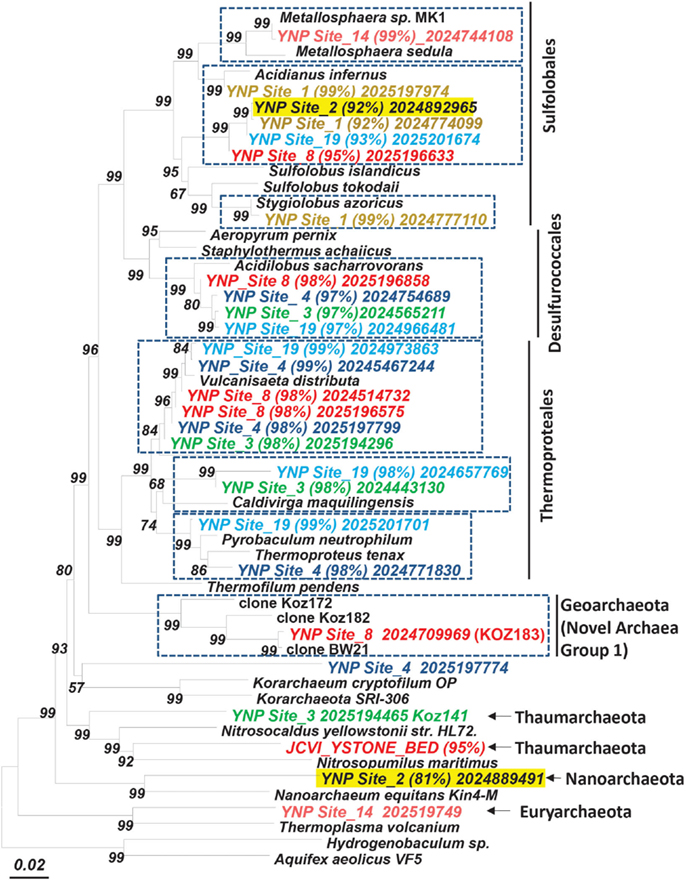
cultivated archaea provide valuable clues about complex life. Recent studies highlight how these microorganisms can shed light on the origins and evolution of life as we know it.
Understanding Archaea
Archaea, a group of single-celled microorganisms, have long intrigued scientists due to their unique properties and evolutionary significance. Recent advancements in microbiology have led to the cultivation of archaea in laboratory settings, providing valuable insights into their biology and ecological roles. These microorganisms are distinct from bacteria and eukaryotes, possessing unique biochemical pathways and genetic structures.
Understanding archaea is crucial for several reasons:
- Diversity: Archaea exhibit remarkable diversity, thriving in extreme environments such as hot springs and deep-sea vents, but they are also found in more common ecosystems, including soil and oceans.
- Ecological Impact: These microorganisms play a significant role in nutrient cycling, particularly in carbon and nitrogen cycles, which are essential for sustaining life on Earth.
- Evolutionary Insights: Studying cultivated archaea offers clues about the origins of complex life, as they share a common ancestry with eukaryotes, the group that includes plants, animals, and fungi.
Recent research focusing on cultivated archaea has revealed new metabolic pathways that could illuminate how these organisms adapt to their environments. As scientists continue to explore the genetics and biochemistry of archaea, they uncover the evolutionary innovations that may have paved the way for more complex life forms. This understanding not only enhances our knowledge of life’s diversity but also opens new avenues for biotechnological applications.
The Role of Microorganisms in Evolution
Microorganisms play a crucial role in the evolution of life on Earth, acting as the building blocks for more complex organisms. Among these microorganisms, cultivated archaea have emerged as significant contributors to our understanding of evolutionary processes. These ancient life forms, which thrive in some of the most extreme environments on the planet, exhibit unique biochemical pathways that provide insights into the origins of cellular complexity.
The study of archaea has revealed several key functions that highlight their evolutionary importance:
- Metabolic Diversity: Archaea possess a range of metabolic capabilities that allow them to survive in diverse habitats. This adaptability suggests early forms of life developed various strategies for energy acquisition and environmental interaction.
- Gene Transfer: Horizontal gene transfer among archaea and other microorganisms has been identified as a mechanism that enhances genetic diversity, potentially accelerating evolutionary change.
- Symbiotic Relationships: Many archaea engage in symbiotic relationships with other organisms, which can lead to mutual benefits and promote the evolution of complex ecosystems.
As researchers continue to cultivate archaea in laboratory settings, the findings not only deepen our understanding of these unique organisms but also provide valuable insights into the evolutionary pathways that led to the development of complex life forms. This ongoing research is essential in piecing together the history of life on our planet.
Recent Discoveries in Microbiology
Recent advancements in microbiology have shed light on the significance of cultivated archaea in understanding the origins of complex life. Researchers have been focusing on these microorganisms, which thrive in extreme environments, to uncover their unique biochemical processes and evolutionary roles.
One of the most notable discoveries involves the identification of novel metabolic pathways in cultivated archaea. These pathways not only illustrate how these organisms survive harsh conditions but also provide insights into the evolutionary link between archaea and eukaryotes. This connection is crucial for deciphering the evolutionary history of life on Earth.
Additionally, scientists have successfully cultivated previously uncharacterized archaea from extreme habitats such as deep-sea hydrothermal vents. This work has revealed:
- Diverse Metabolic Strategies: Many archaea utilize unique energy sources, such as hydrogen and methane, which are not commonly found in other organisms.
- Genomic Insights: The sequencing of their genomes has unveiled genes that may play a vital role in the development of more complex cellular structures.
- Adaptive Mechanisms: Understanding how these microorganisms adapt to extreme conditions can inform studies on the resilience of life.
These findings underscore the importance of cultivated archaea in piecing together the puzzle of life’s complexity and highlight their potential as a key to unlocking the mysteries of our planet’s biological history.
Implications for Complex Life
The recent advancements in the study of cultivated archaea have significant implications for our understanding of complex life forms. As researchers delve deeper into these microorganisms, they uncover insights that challenge traditional views of evolution and the origins of life on Earth.
One of the primary implications of these discoveries is the potential reevaluation of the tree of life. Previously, it was thought that eukaryotic cells, which make up complex organisms, evolved directly from bacteria. However, findings related to cultivated archaea suggest a more intricate relationship between these life forms, indicating that eukaryotes may have originated from a symbiotic relationship between archaea and bacteria.
This revelation opens new avenues for exploring how complex cellular structures and functions may have developed. The unique metabolic pathways observed in cultivated archaea offer clues about early life processes, which could have been instrumental in the transition from simple to complex organisms.
Moreover, studying these microorganisms can enhance our understanding of extremophiles—organisms that thrive in harsh environments. Such knowledge may provide insights into the adaptability and resilience of life, presenting a broader context for life’s evolution on Earth and beyond.
In conclusion, the cultivation of archaea not only enhances our grasp of microbial diversity but also serves as a key to unlocking the mysteries surrounding the emergence and evolution of complex life.
Research Methodologies in Cultivating Archaea
Research methodologies in cultivating archaea have evolved significantly, enabling scientists to gain deeper insights into these unique microorganisms. Archaea, which thrive in extreme environments, require specialized techniques for successful cultivation. Traditional methods often proved ineffective, leading researchers to innovate and implement new strategies.
One prominent method involves the use of enrichment cultures, where specific conditions are tailored to encourage the growth of targeted archaeal species. This approach allows scientists to isolate and study these organisms in controlled settings. Additionally, the application of high-throughput sequencing technologies has revolutionized the way researchers analyze archaeal communities, providing a wealth of genetic information that was previously unattainable.
Another effective technique is the co-cultivation of archaea with bacteria. This method leverages the symbiotic relationships that often exist between these microorganisms, facilitating a more natural growth environment. Furthermore, modifications to the growth media used in laboratory settings are crucial. By adjusting nutrient compositions and environmental parameters, researchers can create optimal conditions for the cultivation of archaea.
These advanced methodologies not only enhance the ability to cultivate archaea but also pave the way for groundbreaking discoveries. By studying cultivated archaea, scientists are uncovering clues that shed light on the evolution of complex life on Earth, revealing the intricate connections between these ancient organisms and modern biological processes.
Future Directions in Archaea Studies
The study of cultivated archaea is rapidly evolving, offering promising avenues for future research. As scientists continue to uncover the diverse functionalities of these microorganisms, several key directions are emerging in the field.
- Genome Sequencing and Annotation: The advancement of sequencing technologies allows researchers to decode the genetic material of cultivated archaea. This can lead to a better understanding of their metabolic pathways and evolutionary relationships.
- Environmental Adaptations: Investigating how cultivated archaea adapt to extreme environments can provide insights into the resilience of life itself. This knowledge may even inform astrobiology and the search for extraterrestrial life.
- Biotechnological Applications: Cultivated archaea hold potential for various biotechnological applications, including bioremediation and bioenergy production. Understanding their unique enzymatic processes can pave the way for innovations in sustainable practices.
- Interactions with Other Microorganisms: Future studies may focus on how cultivated archaea interact with bacteria, fungi, and eukaryotes. These interactions could reveal new ecological dynamics and the role of archaea in nutrient cycles.
- Therapeutic Uses: The unique properties of cultivated archaea may lead to novel therapeutic approaches. Research in this area could open doors to new treatments for diseases, emphasizing the importance of these microorganisms in health.
As the field progresses, the insights gained from cultivated archaea will undoubtedly enhance our understanding of complex life and its origins.
Comparative Analysis with Other Organisms
Recent studies focusing on cultivated archaea have revealed intriguing parallels with other life forms, thereby enhancing our understanding of evolutionary processes. By comparing the genetic and metabolic features of archaea with those of bacteria and eukaryotes, researchers have begun to uncover the evolutionary relationships that underpin the tree of life.
Key findings from comparative analyses include:
- Genomic Similarities: Certain archaea share significant genomic traits with eukaryotes, suggesting a common ancestral lineage that may have played a crucial role in the development of complex cellular structures.
- Metabolic Pathways: The metabolic pathways of cultivated archaea often exhibit similarities to those found in bacteria, particularly in their adaptation to extreme environments. This highlights the versatility of life forms in various ecological niches.
- Physiological Traits: The physiological characteristics of archaea, such as their unique membrane compositions, provide insights into how early life forms adapted and thrived in harsh conditions on Earth.
These comparative studies not only shed light on the evolutionary history of life but also raise questions about the origins of complex life itself. As more data on cultivated archaea becomes available, the potential for groundbreaking discoveries in evolutionary biology continues to expand.
Significance of These Findings
The recent findings regarding cultivated archaea offer significant insights into the evolution of complex life forms. These microorganisms, once considered simple and less significant compared to bacteria and eukaryotes, have now positioned themselves as pivotal players in understanding the origins of multicellularity and the intricate web of life on Earth.
One of the primary implications of these discoveries is the revelation of metabolic pathways that were previously unknown. The unique biochemical processes in cultivated archaea highlight their ability to thrive in extreme environments, suggesting that they may possess traits that can be harnessed for biotechnological advancements. Additionally, these findings challenge the traditional views of the tree of life, providing evidence that complexity may have arisen independently in different lineages.
Furthermore, the evolutionary relationships observed in cultivated archaea can shed light on the genetic mechanisms that contribute to complexity. Researchers have noted that certain genes found in archaea share similarities with those in eukaryotes, which raises intriguing questions about gene transfer and the evolutionary history of these organisms.
Overall, the study of cultivated archaea is not only reshaping our understanding of microbial life but also revealing the potential pathways through which complex life could have emerged. As research continues, the implications for both evolutionary biology and applied sciences are profound, underscoring the importance of these ancient microorganisms in the broader narrative of life’s history.
By Phylogeny Figures via Openverse
